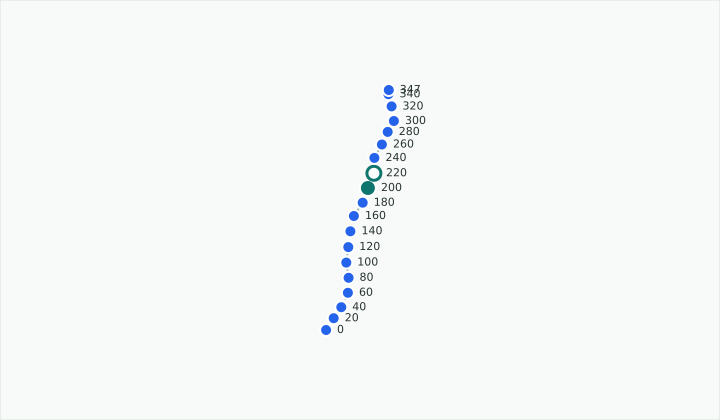
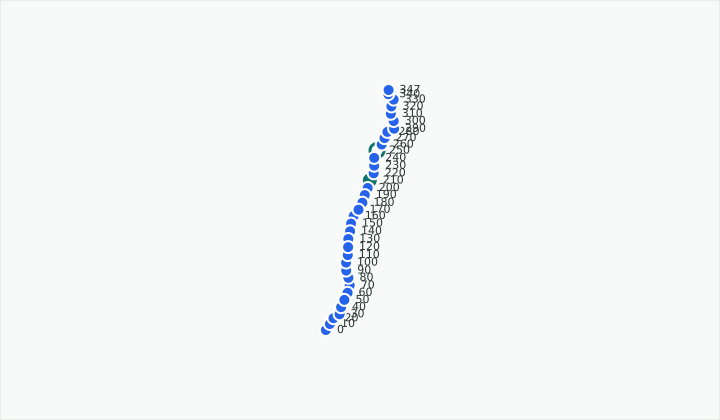
This exhibit shows an early US-97 corridor comparison pack. The engine samples candidate locations along the route, re-runs the study logic by candidate, and withholds a final recommendation unless the measured ranking is stable.
Provisional leader: US-97 20-mile sweep mile 200. Runner-up: US-97 20-mile sweep mile 220. Final recommendation withheld until rank stability clears.
19 of 19 candidates fully evaluated this run; the rest remain in the record as partial rows with their reason stated.
Provisional leader: US-97 10-mile sweep mile 210. Runner-up: US-97 10-mile sweep mile 250. Final recommendation withheld until rank stability clears.
36 of 36 candidates fully evaluated this run; the rest remain in the record as partial rows with their reason stated.
Leader: US-97 20-mile sweep mile 200. Its top two candidates are effectively tied. 19 of 19 candidates evaluated.
Leader: US-97 10-mile sweep mile 210. It clears the runner-up in the current evidence. 36 of 36 candidates evaluated.
The two sweeps disagree on the leader. The 20-mile pass puts US-97 20-mile sweep mile 200 on top; the denser 10-mile pass, which tests points the 20-mile spacing skips, puts US-97 10-mile sweep mile 210 on top. That is the finding, not a contradiction: the apparent leader is sensitive to how densely the corridor is sampled, so a final site pick is withheld until a denser, stability-measured pass resolves it. A reversal between sampling densities marks a band that is not yet recommendation-safe.
Every sampled candidate carries its route provenance, sampling interval, milepost, and coordinate source. A source route and cache readiness report describes what the engine can reach, and it is separate from a live endpoint health certificate.
Deciding among sites on the corridor? A corridor comparison narrows the field on shared evidence, shows what would make a ranking flip, and separates comparison-safe from recommendation-safe before anyone commits.
Commission a corridor comparison