The economic impact of a brewery, winery, or distillery
Craft beverage projects blend manufacturing, agriculture, and tourism, which makes their studies easy to inflate.
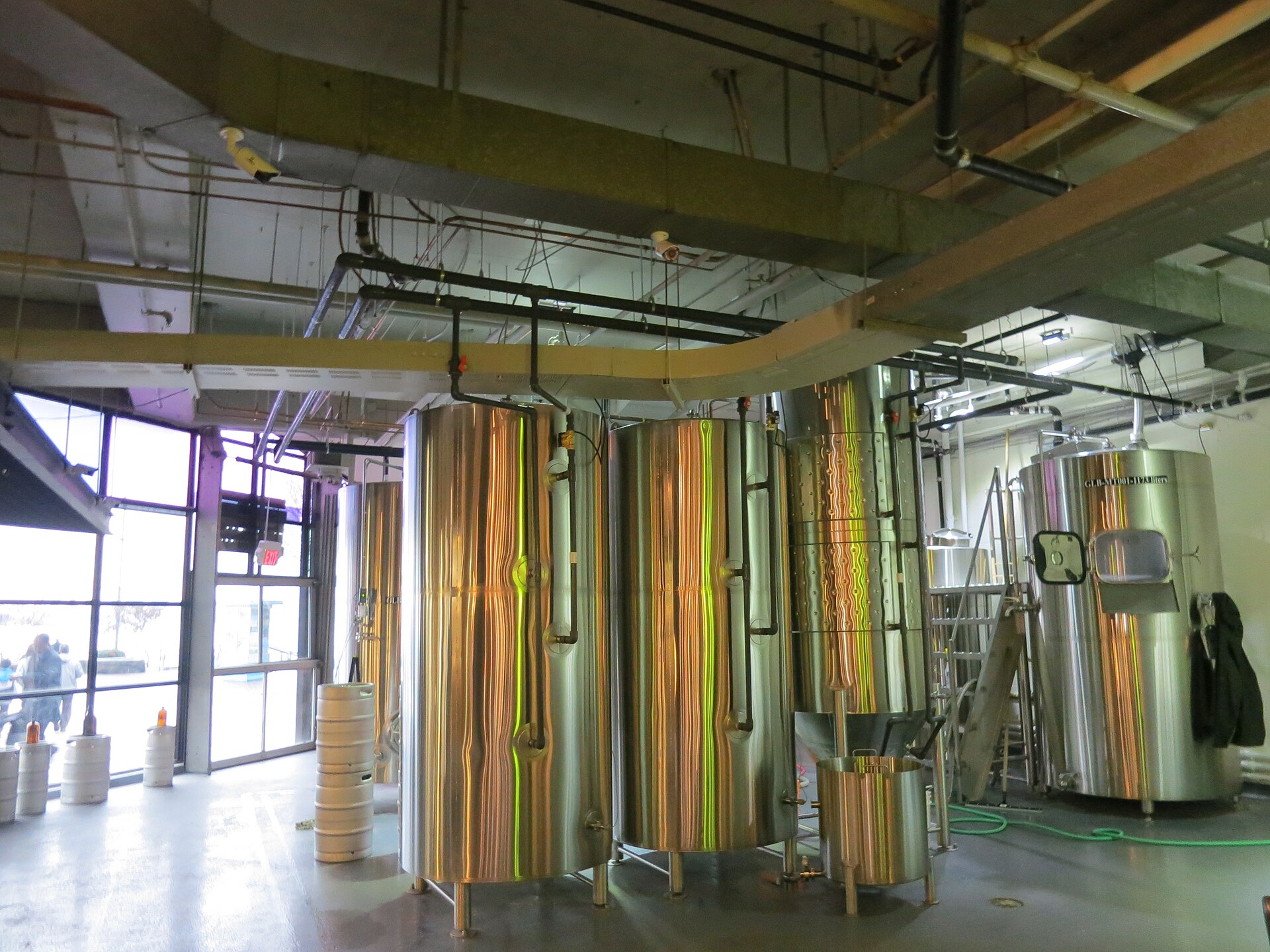
Fermentation tanks inside a craft brewery. Photo: Ruth Hartnup from Vancouver, Canada, CC BY 2.0. Source
Ask how much of the product sells outside the region. Beer bought by locals mostly shifts spending around; only outside sales bring genuinely new money in.
Breweries, wineries, and distilleries are popular projects across the interior West, and they are unusual because they touch three kinds of economic activity at once: manufacturing (production), agriculture (local inputs), and tourism (the tasting room). That breadth is real, and it is also why these studies are easy to inflate if the three channels are not kept separate.
Three channels, three chances to double-count
The production side behaves like manufacturing: if the product is sold outside the region, it brings new money in, and local ingredient sourcing drives the supply-chain effect. The tourism side behaves like hospitality: visitors to the tasting room spend locally, but only the genuinely new visitors count, and their off-site spending leaks like any tourism dollar. The trouble comes when a study counts the same activity through more than one channel, or treats every tasting-room visitor as a new tourist rather than a local who would have spent nearby anyway.
Local sourcing is the real story
The strongest economic case for a craft beverage operation is agricultural: barley, hops, grapes, or grain grown in the region, and the local suppliers and services the operation supports. Where those inputs are genuinely local, the multiplier is meaningful and defensible. Where the operation imports its inputs, much of the romance of the "local" story does not show up in the local economy.
Tourism draw, honestly measured
A destination winery or a well-known distillery can draw real visitors from outside the region, and that draw is a legitimate part of the impact. The honest study estimates how many visitors are genuinely new to the area versus locals, and counts only the new spending, handling leakage the way any tourism analysis should.
What holds up
A defensible craft beverage study keeps the production, agricultural, and tourism channels separate, refuses to double-count activity across them, is realistic about how much of the product is actually sold outside the region, and measures genuinely new visitors rather than all foot traffic. The result is usually more modest than the founder hopes and far more credible to a lender or a grant reviewer.
Weighing a project like this? Tell us what you are considering and where, and we will lay out what a defensible impact and feasibility read takes, and what it costs.
Start a conversation