Independent economic studies for the governments and businesses of Trinity County, built on the county's own federal data and designed to hold up when a lender, an agency, or a funder reviews them.
| Largest sectors by employment | Jobs | Concentration |
|---|---|---|
| Public administration | 642 | 4.62x |
| Health care & social assistance | 390 | 0.91x |
| Educational services | 338 | 1.43x |
| Retail trade | 334 | 1.17x |
| Accommodation & food services | 317 | 1.23x |
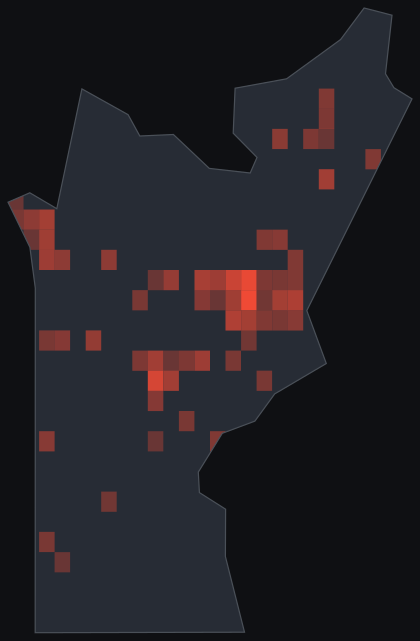
Source: U.S. Bureau of Labor Statistics, Quarterly Census of Employment and Wages, 2023 annual averages, Trinity County. Concentration is a location quotient (county sector share of employment divided by the national share), computed by Project Red Team. Covered jobs exclude the self-employed and some agricultural workers.
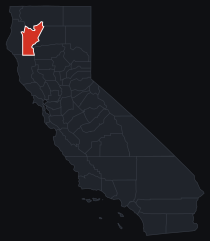
Trinity County runs on roughly 2,804 covered jobs across 464 establishments, at an average annual wage of $56,044, with job growth of 1.6 percent over the year, modest but positive for a county this small and this rural. Public administration is the largest sector by a wide margin, at 642 jobs, ahead of health care and social assistance (390), educational services (338), retail trade (334), and accommodation and food services (317). The concentration numbers explain why: public administration runs at 4.62 times the national rate, the highest specialization in the county, and utilities follows at 3.26 times, with other services at 1.54 and arts, entertainment, and recreation at 1.53. Both of the top two trace to the same source. Trinity County has no incorporated cities, so the county government carries services that most counties split with city halls, and the federal and state agencies that manage the roughly three-quarters of the county held as national forest and other public land, the Shasta-Trinity and Six Rivers National Forests, the Bureau of Reclamation's operations at Trinity and Lewiston Dams, and CAL FIRE, add public payroll on top of it. It is a real, measurable economy, and it is organized around land management and government rather than private industry.
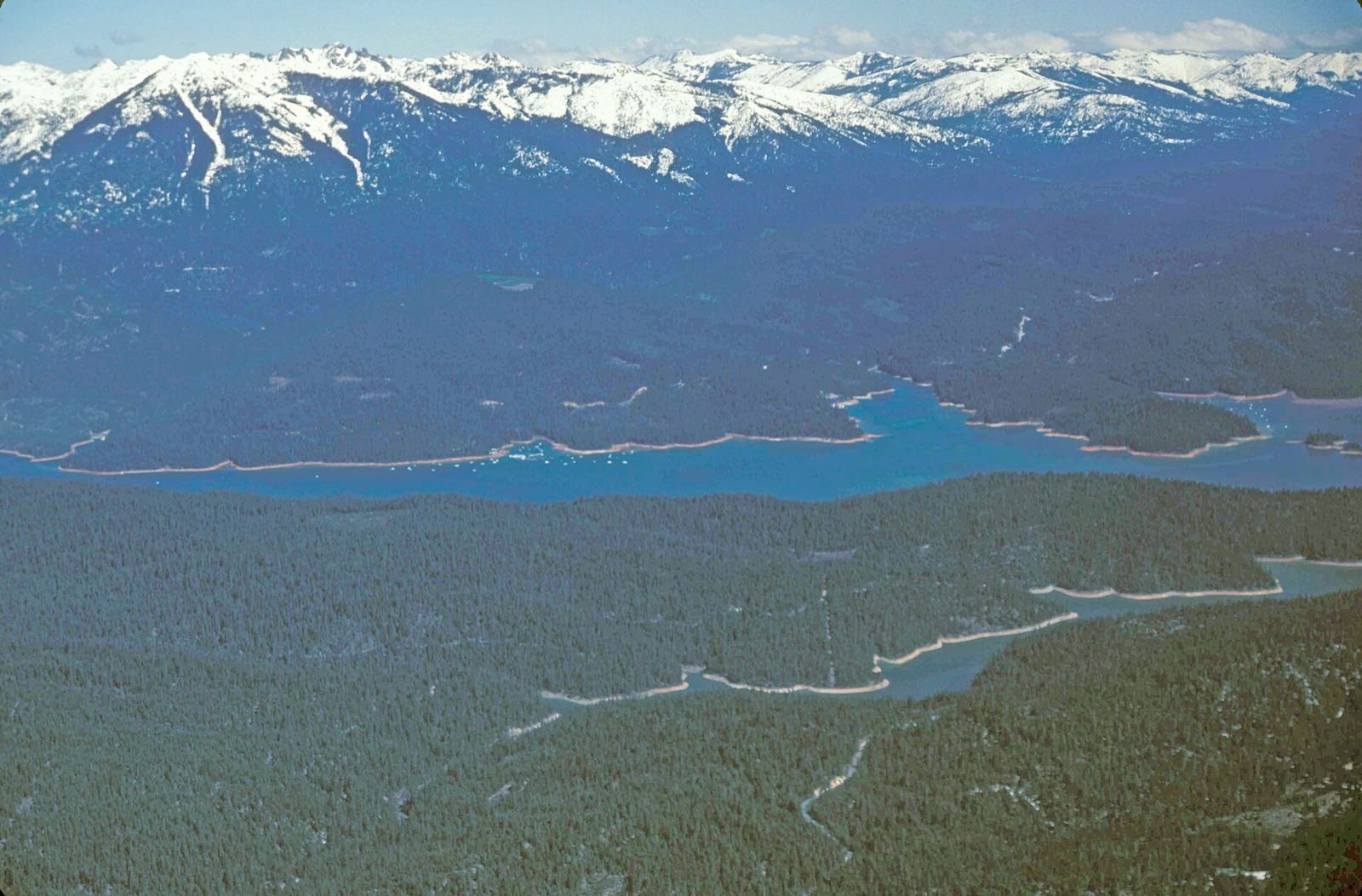
Trinity County is almost entirely public land: national forest, wilderness, and the reservoirs behind Trinity and Lewiston Dams cover roughly three-quarters of the county, and every town in it, including the county seat of Weaverville, has remained unincorporated. Timber built the county's private economy for most of the twentieth century, and the decline in federal timber harvests since the 1990s closed most of its mills and shrank the private-sector job base that once stood alongside the public one. Cannabis has moved from the county's unregulated past into a licensed, permitted, and taxed cultivation economy under the county's own ordinance, and the Trinity Alps Wilderness and Trinity Lake draw a real seasonal tourism trade of anglers, hikers, and houseboaters. What stays steady underneath all of it is the public sector: county government, the Shasta-Trinity and Six Rivers National Forests, CAL FIRE, and the Bureau of Reclamation's operations on the Trinity River, employers whose payroll does not move with the timber cycle or the tourist season.
A restoration project, a forestry operation, a licensed cannabis cultivator, or a tourism venture on Trinity Lake all have to be measured against that base: a thin private economy layered under a public one, where how much of a new dollar stays in the county, rather than moving on to Redding or Sacramento, decides most of what the project is actually worth to Trinity.
A study here could take on the Trinity River Restoration Program, the effort ordered by the federal government's 2000 Trinity River Record of Decision to rebuild the salmon and steelhead runs that collapsed after Trinity and Lewiston Dams began diverting most of the river's flow to the Central Valley in the 1960s. The program has spent more than two decades restoring higher flows below Lewiston Dam, reshaping river channels, and placing spawning gravel, funded through the Bureau of Reclamation and the program's own budget, and the work continues: channel rehabilitation and gravel augmentation projects are still bid and built along the river in most years. That is a real, ongoing program with public spending, construction contracts, and a fisheries outcome that a county, a tribe, or a contractor bidding the work can ask an honest study to measure, separating the restoration spending's own local impact from the fishing and guiding economy the recovered run is meant to support downstream.
Public-data path: BLS QCEW and Census LODES for the local job and wage base, U.S. Forest Service and CAL FIRE timber harvest reporting for the forestry side, the California Department of Cannabis Control's cultivation license data for the licensed cannabis economy, and the Bureau of Reclamation's and Trinity River Restoration Program's own public expenditure and monitoring reports for the restoration economy.
We produce the study first: economic impact (what a project brings to Trinity County, in jobs, output, and tax revenue, with local leakage handled honestly), feasibility and viability (whether it should move forward, measured with the finance a lender runs), and fiscal impact for public budgets and grant applications. Every engagement returns a full report, a one-page brief, a reviewer pack, and a decision package.
And if a study is already in hand, we review it: we inventory its quotable claims, attach the evidence, and tell you plainly what survives review before you quote it or fund against it. More on reading a study before you rely on it.
National firms fly in, bill the travel, and price a county like Trinity out of the analysis it needs, especially one with no incorporated city and no municipal planning staff of its own to lean on. We work across the interior West, we can be on-site in Weaverville, and we build every study on the county's measured federal record, the same BLS and land-management data behind the numbers above, so the result traces to a public source and survives scrutiny.
Have a project in Trinity County? Tell us what you are weighing and where. We will lay out what it takes to answer it, and what it costs.
Commission a study